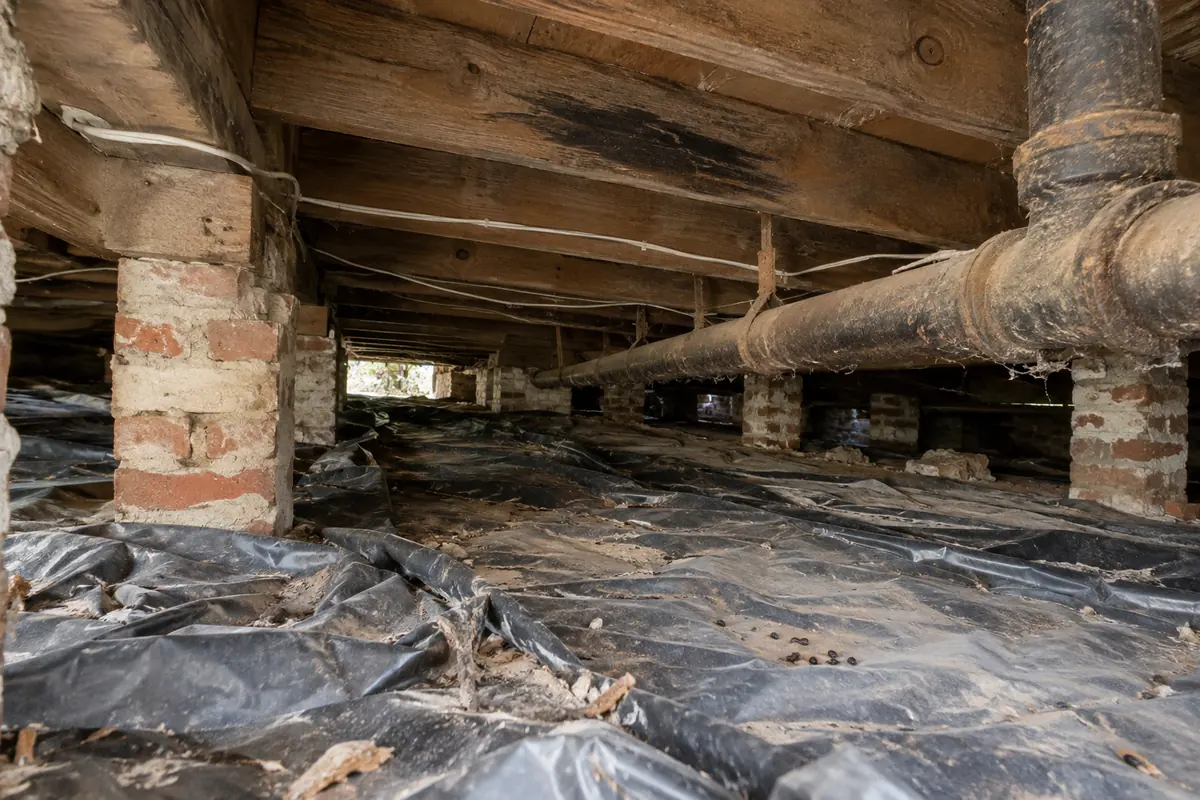
Color does not identify mold, which is where black mold removal in Denver, CO starts. Stachybotrys chartarum is the species that people often call black mold, yet many molds look black and only a lab can tell them apart. Finding the moisture, containing the area and removing contaminated material are what count. Describe what you found through Call Now and an independent remediation company serving 66 ZIP codes around Denver will answer.
What people mean by black mold
Stachybotrys chartarum grows on materials that stay wet for days, such as drywall paper, ceiling tiles and wood after a leak. Other molds such as Aspergillus, Penicillium and Cladosporium also appear dark. A stain that looks black is not proof of a particular species, and EPA guidance treats mold growth in the home the same way: fix the moisture and clean up or remove it.
What not to do
- Do not run fans on it
- Do not sand, scrub or fog it dry without containment
- Do not delay if the area has been wet for more than a day or two
- Do not mix bleach with other cleaners
- Do not paint over it
Health: what to know without panic
Some people are sensitive to mold and may have allergic reactions, irritation or asthma symptoms. This website does not diagnose or promise health outcomes. If someone is unwell, they should speak to a doctor, and people with respiratory conditions or weakened immunity should stay away from the work area.
How black mold is removed
- Fix the moisture source first
- Contain the area and run negative air with HEPA filtration
- Remove affected porous materials and bag them before they leave containment
- Clean framing and hard surfaces with HEPA vacuuming and damp wiping
- Dry the structure and verify moisture readings before rebuilding
Questions to ask a mold remediation company
- How will you dry the structure and what readings show it is dry?
- Who will verify the result, and is that person independent of the work?
- What will you contain, remove and clean, and what stays?
- Where is the moisture coming from, and who fixes it?
- What is in the written scope, and what is excluded?
- How will you control spores and dust in the rest of the house?
How black mold removal works from assessment to clearance
In every room the logic of remediation is the same. Find the moisture first, protect the rest of the building, take out what cannot be cleaned, clean what can be, dry it all and show that the work succeeded. Keeping that order matters, since mold cleaned away while the water remains only delays the problem.
- Assessment: visual inspection, moisture meter readings and, where useful, thermal imaging or a borescope to find hidden damp areas and the water source.
- Plan: a written scope that names the affected areas, the materials to remove, the containment and the drying targets.
- Containment: plastic sheeting, an entry airlock and a negative air machine with a HEPA filter, so spores are not spread through the house.
- Removal: porous materials such as wet drywall, insulation and carpet are bagged and removed; structural wood is cleaned or sanded.
- Cleaning: HEPA vacuuming and damp wiping of surfaces, then drying with dehumidifiers and air movers.
- Verification: a visual check, moisture readings and, where agreed, sampling by an independent assessor before the area is rebuilt.
What shapes the written scope
Jobs that look similar can differ greatly in scope. A written scope should state which of these factors applied to your property and what each of them added to or took out of the work.
Ask the provider to separate the assessment, the removal, the drying and the rebuild, and to say who is responsible for finding and repairing the water source.
- Size of the affected area and how many rooms or levels it touches
- Containment needs, access and occupants who are sensitive or at risk
- Whether sampling or independent verification is wanted or required by a lender, insurer or landlord
- The moisture source and whether it has been repaired
- Materials involved: drywall, insulation, wood framing, carpet, ductwork
Prepare your Denver home for assessment
- Stop using fans that blow across the affected area, which can spread spores
- Take photos of visible growth, stains and the area around it, without disturbing it
- Write down when you first noticed the stain or smell, and any recent leaks, floods or roof damage
- Gather insurance documents, repair invoices and any earlier inspection reports
- Keep the affected room closed and turn off HVAC in it if you can do so safely
Safety, health and what the standards say
Moisture in the building is the root of any mold problem. EPA guidance on mold in homes calls for fixing the moisture problem, cleaning or removing contaminated material and drying the area, while the IICRC S520 standard sets out professional remediation practices such as containment and verification. This website reports what those sources recommend; it makes no medical claims and promises no health outcomes.
Anyone with allergies, asthma, weakened immunity or another health concern should speak to their doctor and stay out of the work area. The area is isolated from the rest of the home, and workers wear respirators, gloves and eye protection.
What makes black mold removal different in Denver
Denver's semi-arid climate means mold usually comes from a specific moisture source (leaks, flooding, ice dams, condensation, basement seepage) rather than constant humidity. Older brick bungalows and Denver Square homes often have basements and crawl spaces with window-well leaks.
Evaporative (swamp) coolers in older homes can add indoor moisture. Spring snowmelt, summer hail on the Front Range, and winter ice dams are common sources of roof leaks. Put this question to the provider: how do these local conditions change the source of the moisture and the way the work is planned at your address?
Black mold removal across Denver and nearby cities
In Denver, Colorado, Mold Remediation Denver serves 66 ZIP codes: 80201, 80202, 80203, 80204, 80205, 80206, 80207, 80208, 80209, 80210. Providers working in Wheat Ridge, Commerce City, Englewood, Arvada and Westminster also receive calls and requests. Because each address is checked on its own, give your ZIP code when you call.
Call Now at the top of the page is the way to start: describe what you found and where the water came from, and an independent remediation company will answer, confirm your address, assess the property and put the scope in writing.
Related help in Denver
If this is not quite your situation, these pages cover the neighboring questions: Hidden Mold Inside Walls: Clues and Next Steps; How to Prevent Mold: Humidity and Moisture Control; Mold and Home Insurance: Questions to Ask; Attic Mold Remediation. The service area list shows every nearby city and ZIP code covered.
Black Mold Removal in Denver: common questions
Will it come back?
It will if moisture returns. Fix the source and keep humidity under control.
How do I know if it is Stachybotrys?
A lab is the only way to know, since color to the eye is not reliable.
Is all black mold toxic?
Not always: color does not identify mold, and health effects differ with the person and the exposure. Fixing the moisture and removing growth carefully is the right response.
Do I need a lab test for black mold?
Species can be identified by a lab, though the removal does not change, and testing helps only in specific situations.
Is it safe to stay in the house?
Take any concerns to a doctor, and the provider can say whether you should leave while the work is done.
Can I clean black mold myself?
Small surface areas on hard materials may be cleaned by following EPA guidance and using protection. Larger areas or porous materials need professional work.